

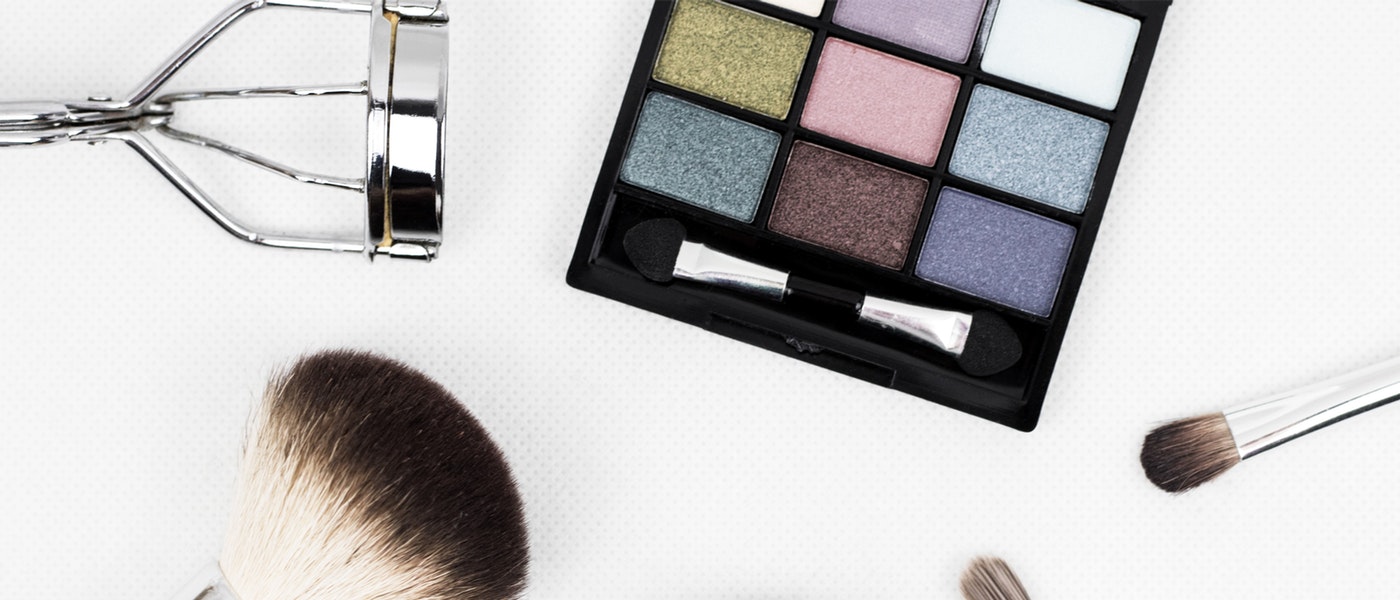
Is Wearing Makeup and Jewelry Allowed in Islam?
The way we look is usually considered as an expression of our character. That’s why it concerns us very much –maybe just a little too much these days. As a Muslim who tries to lead an Islamic life, it might pop into our heads if we are allowed to wear makeup in Islam, use jewelry, perfume, etc. or not.
This question concerns both men and women, naturally a bit more women though. Here, we would like to address the issue in a more general sense; what Islam says about wearing makeup in different situations. And to give a general preliminary answer, as our opening, yes, Islam allows us to wear makeup and jewelry as long as modesty is preserved.
But let us now have a more detailed look at some specific places where the question has been specially brought up and talked of in Islamic traditions:
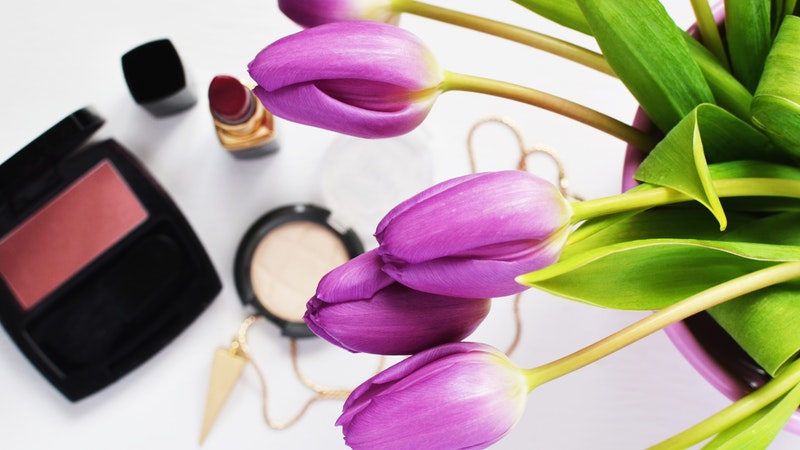
Makeup in Islam
1. When Praying!
It might surprise you to find out that Islam particularly recommends us –though not as an obligation– to be in good shape, wear our best clothes, brush our teeth, wear perfume, and in short, to wear makeup when we stand to pray.
And so did Prophet Muhammad (PBUH) prepared himself for every prayer (Salat) since “God is beautiful and loves beauty,” [1] and conforming to this verse of the Quran:
“O Children of Adam! Put on your adornment on every occasion of prayer… Say, ‘Who has forbidden the adornment of Allah which He has brought forth for His servants, and the good things of [His] provision?’…” (7:31,32)
2. Wearing Makeup in Islam For One’s Spouse
Maybe this is where wearing makeup in Islam is most stressed on. Both men and women are time and again required to appear in the way that looks pleasantest to their better half, especially in their solitary moments.
It is considered a great merit for a woman to put on her make-up, wear jewelry and perfume to charm her husband [2], and as great a merit for a man always to look neat, well-groomed, perfumed, and dressed up in the way that gratifies his wife, even though it takes a little trouble, and even though it’s not the kind of outfit he likes best [3].
A man or a woman should never have the impression that their spouse is more concerned with how he or she looks to others than to them!
3. In the Public
Here, actually, Islamic Interpretations are varied. On the one hand, all Muslims are repeatedly recommended to look neat and groomed in public [4]. On the other hand, red lines have been drawn where an important Islamic principle is at risk: modesty.
Men are generally allowed to wear jewelry, such as rings or necklace (though necklaces are more commonly used by women in some Muslim countries), but they are forbidden from wearing any golden ornaments, maybe because Islam always wants there to be a certain line between men and women’s appearance, in the same way as Muslim men are required to wear a beard.
Women, too, are allowed to wear make-up, jewelry, or perfume in public as long as it doesn't make them appear sexually attractive. And of course, the bottom line for sexual attraction could be different from culture to culture. Several verses of the holy Quran ask women to keep a modest look in the public:

“… [tell the faithful women] not to display their charms, beyond what is [acceptably] visible… And let them not thump their feet to make known their hidden ornaments.” (24:31)
This verse mentions an example of immodesty at the time and culture of early Islam. But the rule applies to any kind of appearance or manner which is intended or is very likely, to provoke sexual interest in anybody other than one’s spouse.
Conclusion
According to what we said, therefore, Muslims are very much suggested to, so to say, wear makeup in Islam for praying and for one’s spouse. They are also advised to do so in the public sphere so far as one’s appearance is not in a way that could excite unlawful (Haram) sexual temptations.
References:
- Bihar al-Anwar, vol. 83, p. 169
- Al-Kafi, vol. 11, p. 165 , Al-Kafi, vol. 11, p. 168
- Makarim al-Akhlaq, p. 80
- Bihar al-Anwar, vol. 16, p. 249
Share This Article
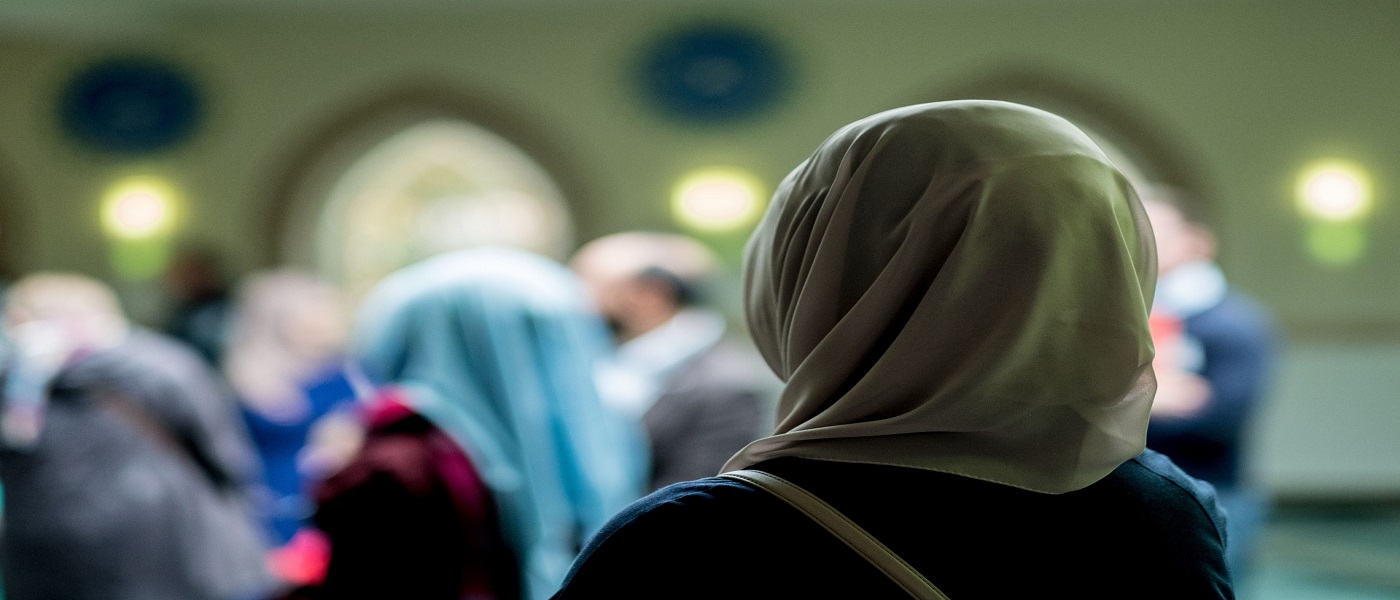
Five Misconceptions about Muslim women
23 - Jan - 2021
125 Read
Min
I am a Muslim woman. I grew up in an Islamic country. I went to segregated schools, sports clubs, swimming pools, friendly parties, and wedding parties. Then I chose Media as my career. I worked in different journals, made films, and traveled to various cities and countries, with or without my family.
As a Muslim who believes in modesty and follows the rules of Islam, my Islamic country is an outstanding place. However, I did not realize that, until I had to leave my country. I lived in Europe for several years. I had heard that the west is where the dreams of freedom come true. But after a short while, I found myself imprisoned in Europe.
I am a table tennis trainer, a good swimmer, a good basketballer, and relatively professional in many sports. In my Islamic country, I used to go to women’s sports clubs or women’s swimming pools after school since childhood. But years ago in Europe, I could not find any sports clubs that were segregated from men, so I could wear my comfortable sports set and play my favorite sports. Because there were men everywhere, and I wanted to keep my modesty, besides my Hijab.
Then a few Muslims came together and decided to rent a sports club for a few hours over the weekend. It sounded awesome, but when we went to that sports club that we had hired for women only, I realized that European Muslims who were born and raised in European countries were mostly very weak in sports.
Basically because since childhood they did not have access to segregated sports clubs to learn and practice any sports. And of course, my problem was that I could not find anyone to play professionally with and enjoy playing! Therefore for as long as I lived in Europe I felt imprisoned.
And when I returned to my Islamic country, I was so thankful that I had sports clubs (where we have our athletic competitions), gyms, swimming pools, spas, and even women-only parks! where we could enjoy running without a scarf or taking a sunbath, and not worry that we are doing anything against God’s will or orders.
Talking too much about my memories of a Muslim woman was all for the goal to discuss a few misconceptions about being a Muslim woman and deprived of social rights.
1. Muslim Women Cannot Educate!
Well! What should I say? This article is being written by an educated practicing Muslim woman who is now educating other Muslim and non-Muslim women.
We have narrations from our beloved prophet (PBUH&HP) that encourage us to learn until death; “Gain knowledge traveling” [1] or “Gain knowledge even if it is in China.” [2], which emphasizes the importance of gaining knowledge during one’s lifetime, even if one has to travel far distances and learn the knowledge from non-Muslims.
Also in another narration, our prophet (PBUH&HP) makes it an obligation to learn, and not only an obligatory for men, but he emphasizes that it is also a lifetime and necessary for women to be knowledgeable; “Gaining knowledge is an obligation upon all Muslim men and women” [3].
We also read in the history that the prophet’s (PBUH&HP) daughter and granddaughters were excellent teachers and used to teach women of their era.
The only issue that is raised about women’s education is being in mixed classes and groups with male students. In such situations, it is not women’s education that is forbidden (Haram), but like any other situation of mixed gatherings (men and women), people should be wary of their relationships.
Women should avoid flirting and chatting about different issues with men if it is not necessary. The relationship between students of the opposite sex is lawful (Halal) as long as there is no intention for pleasure. [4]
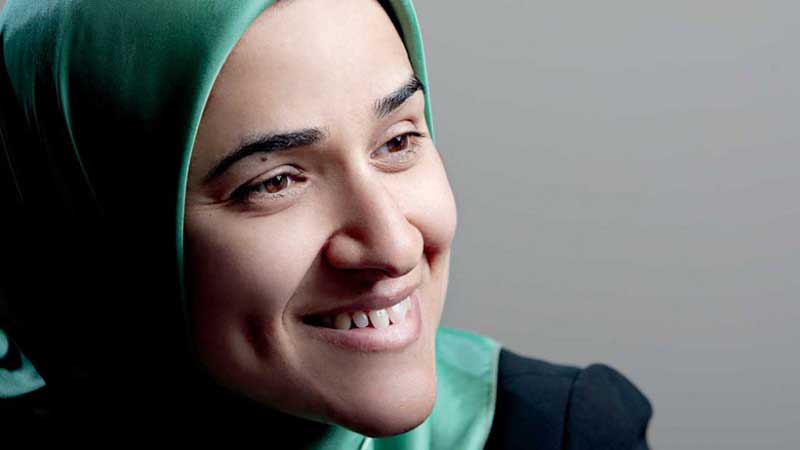
"Dalia Mogahed was the US’ first Muslim woman in the White House back in 2009 and one of Barack Obama’s ‘closest advisors’"
2. They Cannot Be Engaged in Political Activities!
In Islam some duties that are obligatory for men, such as defending the borders of their country if it is attacked, or working outside the house to earn money for a living. But making it compulsory for men, never means that it is forbidden for women.
“Islam views women as masters of the family and emphasizes that the family environment must become a safe, dignified and tranquil one for women so that they could do their best in fulfilling their main task which is to care for the family .” That is the reason for which there is no force on women to work and bring money for the family. [5].
And that, in fact, is the most important social activity in itself. However, if a woman would like to participate in different social and political activities, besides her role as a wife or a mother, there are no objections towards it. Muslim women have no essential duties in their homes such as cooking or cleaning or sewing, etc. unless they wish to do it themselves. Otherwise, the husband could hire a servant to do the house works.
Nevertheless, the fact that women are less active in political activities comes down to their feminine nature. Imam Ali (AS) says: “woman is like a fragrant flower, and not a champion” [6], which means she should not be expected to do tasks that are beyond her capabilities. But it does not mean that she cannot choose to do things that may naturally be against her nature.
Also, some women may not choose to do manly tasks. However, at some point, they have no choice but to do so. For example, it is narrated that at the time of Imam Ali (AS), Lady Fatima (AS) went to the mosque and performed speeches. Or after the event of Ashura, Lady Zainab (AS) took on her shoulders the responsibility that was even hard for a few strong men and performed political speeches in different places.
3. They Cannot Drive!!!
There are plenty of issues that are forbidden in Islamic countries, either for men or women, which are not related to the Islamic law but go back to the old cultures and traditions of those nations. For example, wearing a veil for Muslim women, or preventing women from education, etc. are all amongst those old cultures.
However, many of them have been mixed up with the Islamic law, and people regard them as religious matters instead of social conventions. But we have to be clever enough, to distinguish between the Islamic law and old traditions of different nations. The same way that Muslims do not relate mistakes of “so-called” Christians to the religion of Christianity.
Driving is forbidden for women in very few countries, and there is no firm Islamic ruling to support it.
In fact driving in today’s world, makes traveling safer for women and there is no rational opinion against it.
4. They Cannot Play Sports!
There are many narrations from our Prophet (PBUH) that encourage people to do sports that are common in their time such as swimming, horse riding, and archery, and in those narrations, women were never excluded. In fact, no reference shows sports to be forbidden (Haram) for Muslim women. But in this case, again it is the issue of modesty and Hijab that should be observed.
Regarding sports that are forbidden (Haram), there is no difference between men and women. Sports that are connected to gambling or may harm the player are forbidden (Haram) for both men and women.
5. They Cannot Have Fun!
There is no problem for women having fun if they do not commit a sinful act; and again, there is no difference in this between men and women. The only point for women is that they should consider keeping their hijab and modesty (Haya) and do not join activities that may harm their chastity. You can read about forbidden (Haram) and lawful (Halal) fun in Islam in related articles.
Reference:
- Wasa’el al-Shi’a, vol. 27, p. 27
- Dailami, Irshad al-Quloub ila- al-sawa, vol. 1, p. 165
- Amali Al-Sadouq, p. 419.
- muslim women
- women in islam
- Ghurar al-Hikam & Durar al-Kalem, p. 759
Read More
Can I Convert to Islam And not Wear Hijab?
05 - Feb - 2021
2,317 Read
4 Min
To answer this question about wearing Hijab, we should first understand why God has sent down religion to man and why He orders man what to do and what to avoid.
Imagine a person who invents an electronic device, for example, a computer; he knows how the computer should be used to give the best outcome. Therefore, there is always a manual coming with the computer that tells us how to use it for a better result. So the user uses the manual to keep the computer safe and productive.
God has created man, and He knows what is good and what is harmful to him/her. He sent the religion and the Quran as a guide for human beings. Following the instructions in the book will lead to the useful, peaceful and productive life of a human.
Why so many hard rules?
Some people say that being a Muslim is not merely to pray or fast or observe the Islamic clothing rules (Hijab), but it is the faith of a person that makes him/her a true Muslim, and obeying the Islamic rules is not as important as having pure faith in God. But the fact is that reaching such levels of faith is only possible by passing the phase of being in complete obedience to God.
Islam means submission and being a Muslim means that one accepts to submit to God’s orders. The father of all Muslims, Christians, and Jews according to the Quran is Prophet Abraham (PBUH): “the faith of your father, Abraham. He named you ‘Muslims’ before” (22: 78). Therefore, from the time of Prophet Abraham (PBUH) the followers of all monotheist religions are called Muslims.
Although some Islamic rules may look hard to obey, the fact is that “Allah desires ease for you, and He does not desire hardship for you” (2: 185), and the rulings of Islam are to make our life easier, not harder. God has provided specific frameworks for us to reach a comfortable, peaceful and prosperous life, and to face fewer challenges in life. One of those rules is observing the Islamic dress code (wearing Hijab).
Our problem is that we can only see limited dimensions of an issue. For example, in case of the Islamic dress code (Hijab), we just see that it may be hard for women to cover up in a specific way. Or they may be unable to present their beauties in the society, while the Islamic dress code (Hijab) is there to make women protected in their social relations. Hijab is for women to be respected and recognized because of their character, beliefs and capabilities, NOT their appearance and physical beauty. It also helps them be less troubled by those men who have sick hearts [i].
Can one be a Muslim and not wear the Hijab?
Before one realizes that Islam is the real truth and as long as people are in search of the truth, there is no blame on them for not being a Muslim and not following the Islamic rules. But, as soon as one understands that Islam is the true religion from God and the most perfect one, then he/she should logically become a Muslim.
After accepting the main principles of Islam (the Islamic axioms), if you have only a few misconceptions about some of the Islamic rulings such as the Islamic dress code (Hijab), it is suggested that you embrace and try to observe all the Islamic rules, especially the Islamic dress code (Hijab).
This is just like taking a prescription from our GP when feel obliged to take all the medicine for a better result without knowing the reason for using some of it. As you start acting according to some of those rules that do not make sense to you, you can begin to study and to understand the reason for some details that may be unknown to you right now.
When we believe in Islam, we should believe in it as a whole. It is not correct to accept some parts of it and reject the other parts because in that case, the peaceful life that is promised to Muslims by obeying all religious rules will not be reachable. This uncompleted obedience is like a machine that has lost some of its components and does not work properly. A Muslim who does not obey all the rulings still counts as a Muslim but does not gain the entire benefits that Islam can bring to a person with complete obedience.
Remember again that Islam means being submissive to God’s orders. We always aim to be the best at something that we start. For example, we may strive to be the best in our education or our career. The same should be with our religion so that one day we may enjoy being as friendly to God as Abraham (PBUH).
“Who has a better religion than him who submits his will to Allah, being virtuous, and follows the creed of Abraham, a Hanif? And Allah took Abraham for a dedicated friend.” (4: 125)
Conclusion
Becoming a Muslim and obeying the Islamic rules has its own adversities, but at the same time, it has many advantages. A real Muslim who does not only stick to apparent rules of Islam and uses the spiritual tips and hints for his/her spiritual growth can reach the most peaceful life; “Look! The friends of Allah will indeed have no fear, nor will they grieve” (10: 62)
Notes:
[i] Hijab
Read More
Category Article
- Family (32)
- Lifestyle (222)
- New Muslim (37)
- Pillars (19)
- Practical Principles (20)
- Women (25)
Popular Article
- 40 Inspiring Quotes of Imam Hussain (AS…
- What Does Islam Say about Watching…
- Is It Permitted to Marry a Transgender…
- What Does Islam Say about Friendship?
- Are Muslims Allowed to Dance?
Category Gallery
- Comic (29)
- Infographic (178)
- Picture (495)
- Podcast (127)
- Video (218)
Popular Gallery
- 6 Verses of the Quran about Prophet…
- A Glance at the Life of Prophet…
- Five Sayings of Prophet Muhammad (PBUH…
- 8 Pieces of Advice to the Young Ones by…
- The Battle of Karbala: A Timeline